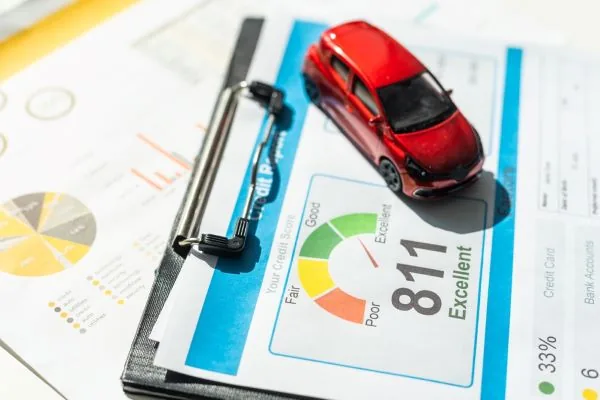
Most Australian credit scores run on a 0 to 1,200 scale, and Equifax's is the one lenders quote most often. Not everyone reads it the same way, but the bands are broadly:
- 833 to 1,200 - excellent
- 726 to 832 - very good
- 622 to 725 - good
- 510 to 621 - average
- 0 to 509 - below average
The higher you sit, the less likely you are to miss a payment over the next year, at least on paper. That's really what a lender is buying when they look at the number.
So what's the minimum?
Nobody quotes a firm floor, because it depends who you ask. The big banks and mainstream financiers usually want to see 'good', roughly 622 and up, though a steady job and a solid income can carry an 'average' score across the line. Non-bank and specialist lenders will often go lower, sometimes well below average, but you'll pay for it with a higher interest rate to cover the extra risk they're taking on.
So a low score rarely means a flat no. More often it just means dearer.
Your score isn't the whole picture
Lenders look past the number too. Your income and how long you've been in your job, how much you're putting down, the car itself (a five-year-old hatch and a brand-new dual-cab are very different risks), and whatever debts you're already carrying all feed into the decision. A great score with a shaky income can still get knocked back, and a middling score with a big deposit often won't.
Lifting a low score before you apply
If your score isn't where you want it, you have some room to move before you sign anything. Pull your credit report first - you're entitled to a free copy - and actually read it. Mistakes are more common than people expect, and you can dispute anything that's wrong. After that it's the unglamorous stuff: pay every bill on time, because even a couple of late ones leave a mark, and chip away at your card balances and existing loans. None of it is instant, so start a few months out if you can.
And if the car you're eyeing is used, sort the finance and the history at the same time. A PPSR check tells you whether it still has money owing on it, or has been written off or reported stolen - the sort of thing a test drive will never show you. It costs a couple of dollars and is worth doing before you hand over a cent, however good the loan looks.